
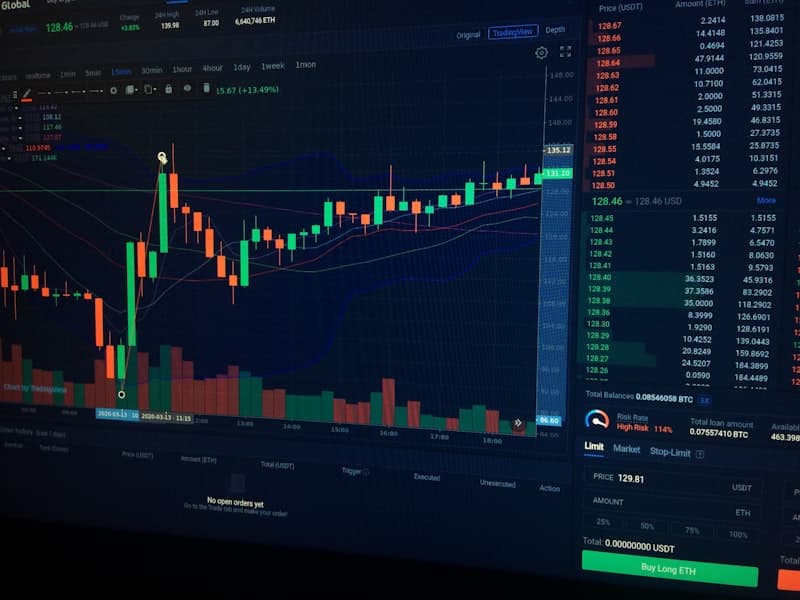
Prop‑firm evaluations are a rite of passage for many aspiring professional traders. Unlike a personal account where you set your own risk parameters, a prop‑firm imposes a set of objective rules that you must obey while proving you can generate profit. The most frequently encountered rules revolve around drawdown limits, consistency metrics, and profit targets. Understanding these constraints—and how they interact—allows you to design a trading plan that respects the firm’s risk framework while still giving you room to showcase skill. Whether you opt for a 1‑Phase evaluation to fast‑track your funding or a 2‑Phase evaluation for a more gradual ramp‑up, knowing the rules inside‑out is the difference between passing and failing.
A prop‑firm evaluation — such as the Global4EX Challenge — is a time‑boxed trial (often 30, 60 or 90 days) during which you trade a simulated or real account owned by the firm. The firm watches two things:
If you meet the criteria, the firm funds you with a live account and shares a portion of the profits. Failing to meet any rule typically results in a reset or termination of the trial.
Definition – The maximum amount your equity can fall below the previous day’s closing equity. It is usually expressed as a percentage (e.g., 5%) or a fixed dollar amount.
Why it matters – Daily drawdown protects the firm from sudden, large losses that could wipe out capital in a single session. It also forces traders to avoid “all‑or‑nothing” bets.
Typical values – 3‑7% for most retail‑focused firms; elite firms may allow tighter limits (2%).
Definition – The total equity decline from the highest point (peak) to the lowest point (trough) during the entire evaluation period.
Why it matters – MDD reflects long‑term risk discipline. A trader who respects daily limits but eventually erodes the account will still be rejected.
Typical values – 10‑20% of the starting balance. Some firms use a tiered system: 10% for the first half of the evaluation, 15% for the second half.
Prop firms often demand that profit be generated regularly, not just in a single lucky burst. Consistency can be measured in several ways:
The goal is to ensure the trader can adapt to varying market conditions rather than rely on a single high‑risk play.
Most evaluations specify a target profit that must be reached before the evaluation ends. Targets are expressed as a percentage of the initial balance (commonly 10‑15%) or as a fixed monetary amount.
Key nuance – The target is usually net of fees (commissions, spreads) and must be achieved while still respecting drawdown limits. Hitting the target early does not grant a free pass; you must stay within the drawdown rules until the evaluation expires.
Some firms cap the notional size of any single trade (e.g., no more than 5% of the account) or limit the leverage you can apply (e.g., max 1:20). This prevents a trader from loading a single position with excessive risk that could instantly breach drawdown limits.
A few firms restrict the instruments you may trade (e.g., only major FX pairs, no crypto) or the time‑frame (no scalping below 1‑minute). These rules are meant to keep the firm’s exposure aligned with its own risk appetite.
A common starting point is 1% of the account equity per trade. With a $50,000 evaluation account, 1% equals $500. This figure ensures that even a series of consecutive losses will not breach daily or overall drawdown limits quickly.
Calculate position size using the formula:
Position Size = (Risk per Trade) / (Stop‑Loss in Pips × Pip Value)
If you risk $500 and your stop‑loss is 25 pips on EUR/USD (pip value $10 for a standard lot), the position size would be 2 mini‑lots (0.2 standard lots). This approach automatically respects the firm’s maximum position‑size rule.
Assume a 5% daily drawdown on a $50,000 account = $2,500. If you risk $500 per trade, you can afford up to 4 losing trades before hitting the daily limit. Plan your day accordingly: after two consecutive losses, consider reducing risk or pausing trading.
Because consistency is rewarded, aim for multiple modest‑gain days rather than a single large win. A practical target is 0.5‑1% net profit on winning days. Over a 30‑day evaluation, achieving this on 15‑20 days comfortably meets most consistency metrics.
Record the following for every trade:
Review the journal weekly to spot rule breaches early and adjust.
| Pitfall | Why It Happens | Fix |
|---|---|---|
| Over‑leveraging for a quick target | The desire to hit the profit goal early leads to larger position sizes. | Stick to the 1%‑per‑trade rule; increase trade frequency instead of size. |
| Ignoring daily drawdown until the end of the day | Traders focus on end‑of‑day profit and forget that a single loss can already breach the limit. | Set an alarm when equity falls 75% of the daily limit; pause trading. |
| Chasing losses | After a losing streak, the urge to “recover” pushes risk higher. | Reduce risk to 0.5% after two consecutive losses; consider a no‑trade day. |
| Trading outside approved instruments | Curiosity leads to exotic pairs or crypto, which may have higher spreads. | Keep a checklist of allowed symbols; disable alerts for prohibited assets. |
| Failing to meet consistency metrics | Relying on a few big winners and ignoring daily win‑rate. | Aim for a minimum of 12‑15 winning days; treat each day as a mini‑goal. |
Prop‑firm evaluations are essentially structured risk‑management exams. The drawdown limits teach you to protect capital, the consistency rules test your ability to adapt, and the profit target measures your edge. By translating each rule into concrete actions—fixed risk‑per‑trade, disciplined position sizing, daily loss buffers, and a rigorous journal—you can navigate the evaluation with confidence.
Remember that the evaluation is not a sprint; it is a marathon of disciplined decision‑making. Treat every trade as a data point that either validates or refines your strategy, and let the firm’s rules be the guardrails that keep you on the path to becoming a funded professional trader.
If you are searching for the best prop firm in 2026 with an affordable evaluation process, the Global4EX Challenge offers both 1-Phase and 2-Phase paths with no time limit and low drawdown thresholds. Traders who prefer to skip the evaluation entirely can explore HFT Instant—a direct-funding option—or scale into a MyFinancial Pro funded account once they prove consistency.
Published by the Global4EX Team. Learn more at global4ex.com
Join Global4EX where traders unite, grow, and get rewards.
Join NowAll information is provided "as is," without warranties of completeness, accuracy, timeliness, or results, whether express or implied. Users are solely responsible for evaluating the risks and benefits associated with the use of this website's content.
Payments made to access simulated challenges are not deposits, investments, or client funds, but subscription fees for participation in evaluation programs and educational materials. All fees collected are allocated toward operational expenses, including but not limited to personnel, technology, and business infrastructure.
The information provided regarding simulated challenges is intended solely for educational purposes related to trading practices. It does not constitute investment advice, financial services, brokerage services, business recommendations, investment opportunity analysis, or general recommendations regarding trading financial instruments.
It provides simulated evaluations using data feeds from reputable brokers and platforms solely for the purpose of educational and training simulations. No real trading activity or execution of financial transactions takes place on behalf of participants.
This website and its content are not intended for residents of jurisdictions where its distribution or use would contravene local laws or regulations.